 Leak #2 · Invisibility
 Your shea butter might be the best on the market. Your community knows it. Google doesn't — and when a customer searches for your product without going through Instagram, she finds everything except you.
It's almost never a quality problem, and rarely a content problem. Here are the real causes, and the test to identify yours in five minutes.
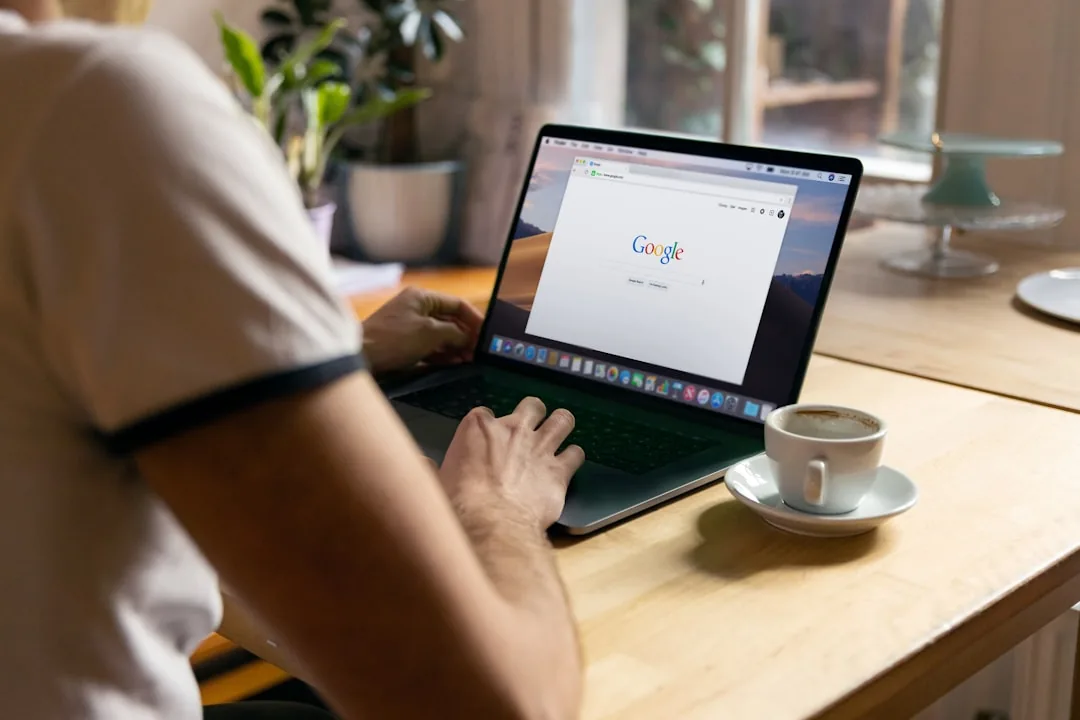
Intuition says: "write more, start a blog, add descriptions". Sometimes that's true. But on most of the brand sites I audit, the blocker sits further upstream: Google doesn't see the pages, or doesn't understand what they sell.
The causes that come up most often:
The good news: structure problems get fixed faster than content problems. You just need to know which one is yours.
You don't need a single paid tool.
site:yourbrand.com into Google. The number of results ≈ what Google knows about your site. Compare it with your real page count (products + collections + pages). A massive gap = an indexing problem.This test tells you whether you have a problem and which one. It doesn't tell you how much it costs you or where to start — we're getting there.
The range name is your branding: keep it. But a product page has to carry both languages — yours and search's.
"Royal Glow" becomes "Royal Glow — Curl Defining Cream for 3C-4C hair". Your identity stays, and the page becomes findable by the thousands of customers who don't know your vocabulary yet. That's exactly the principle of cultural SEO: speaking your community's real language — including in your title tags.
This naming work happens product by product, crossing your ranges with your market's real queries. It's one of the typical workstreams that come out of the Diagnostic.
If the test reveals a gap, you now know part of your demand is slipping past you — without knowing how much, or which cause to fix first. Start by estimating the amount with the free calculator.
To go from the estimate to the real number — your pages, your queries, your prioritised fix plan: the AfriRank Diagnostic. €290 (~$310), credited toward your first month if you continue.
Almost never. In the vast majority of cases the existing structure can be fixed: indexing, naming, internal linking between pages. A rebuild is a last resort — and a poorly scoped rebuild is precisely one of the top causes of lost visibility.
No. Brands rank very well on every one of those platforms. They have real technical limits, but known and workable ones. The problem is what was done — or not done — inside them.
Partly. Google grants its trust gradually. But "waiting" fixes neither the indexing, nor the naming, nor the orphan pages. A young, well-structured site outranks an old, neglected one — age is a factor, not an excuse.

Your pages, your queries, your prioritised fix plan — from the test to the real number. €290 (~$310), fully credited toward your first month if you continue into an engagement.
